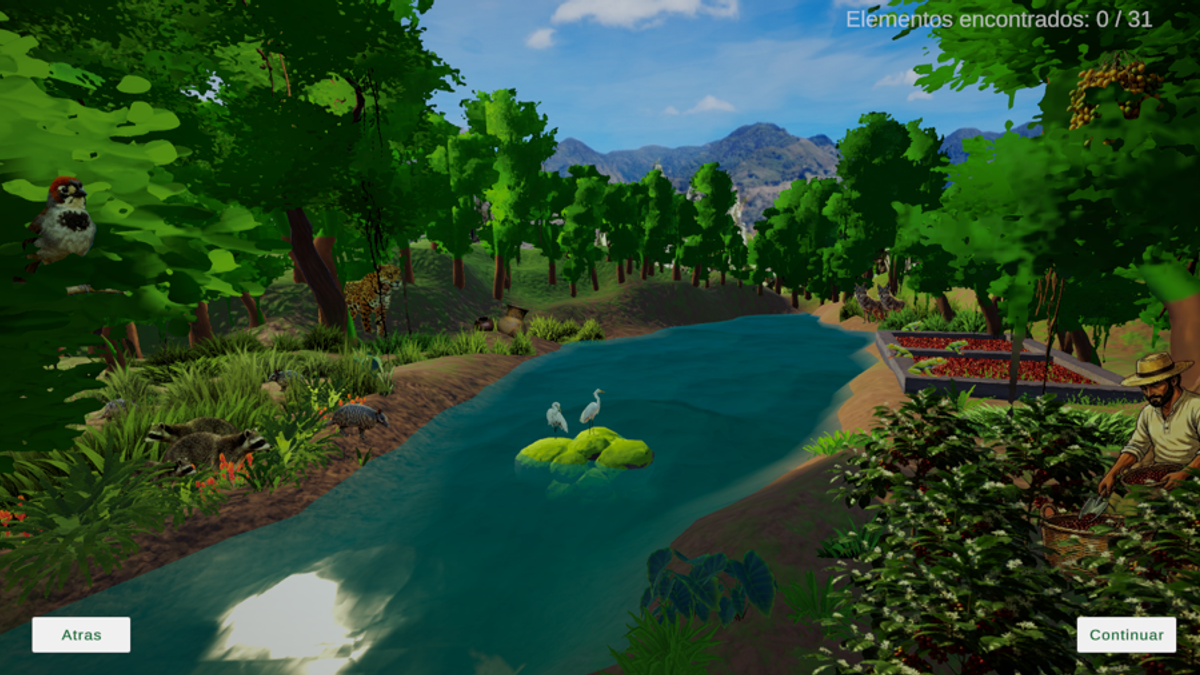
TL;DR: Can technology help us visualize and recover the green heart of our city? Hatillo Verde is a community initiative backed by the Municipality of San José that seeks to rescue the banks of the Tiribí River. To support this mission, SpatialLab created an accessible digital experience that allows anyone to explore how this natural space is reborn over time, uniting ecological awareness, scientific data, and environmental justice.
1. The challenge: creating a true refuge for nature in the city
In the heart of the capital, the Hatillo community is leading a monumental environmental and social effort: rescuing the abandoned spaces of an old coffee farm adjacent to the Tiribí River. Led by the father-son duo Huberth-a mathematician and an architect, respectively-the initiative seeks to create active and biodiverse ecosystems, placing a strong emphasis on protecting historical and cultural heritage.
The mission pursued three ambitious objectives: raising awareness about the problem, generating institutional advocacy, and taking real action. How could we make conservation science and "neo-ecosystems" visible so that authorities and neighbors could immediately understand them? We needed to translate a community vision into a persuasive tool.
2. Our solution: connecting people with their environment
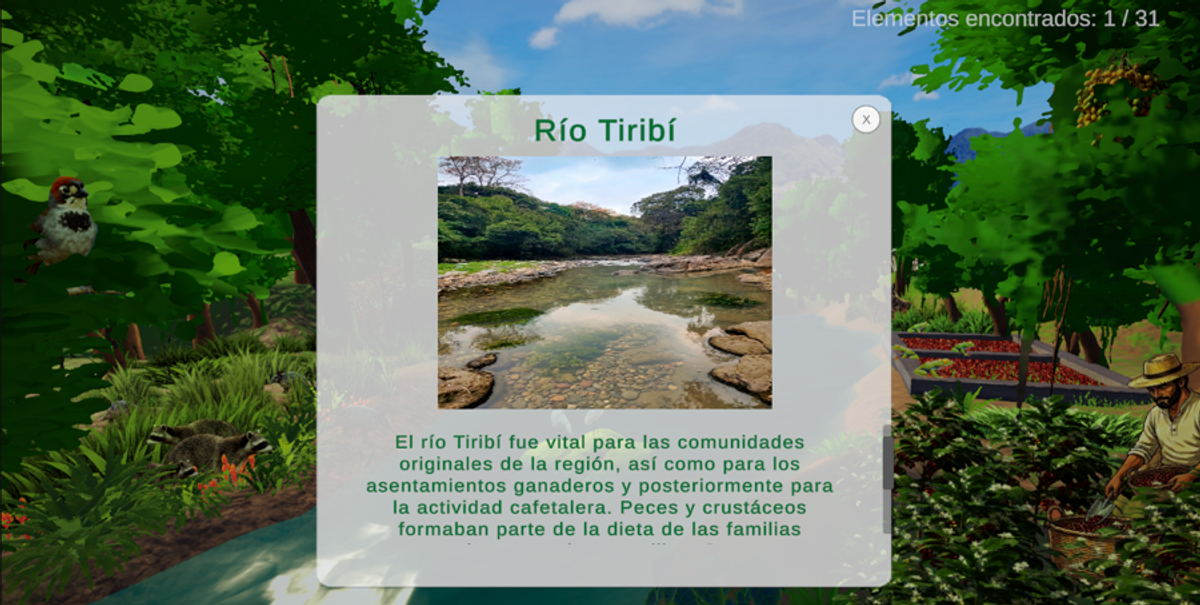
As part of our Technology with Social Purpose axis, we aim for our tools to educate, guide, and raise awareness in Costa Rican society. To respond to the community's need, we created the digital component of Hatillo Verde: a visual and interactive experience accessible directly from the internet.
Through a transmedia narrative, users can explore sustainable restoration and the protection of endangered endemic species. The tool shows three temporal states of the urban ecosystem. By running directly from a web browser, we eliminate barriers to use, offering an open window for environmental education to anyone.
3. Behind the scenes: bringing a 3D world to anyone's browser
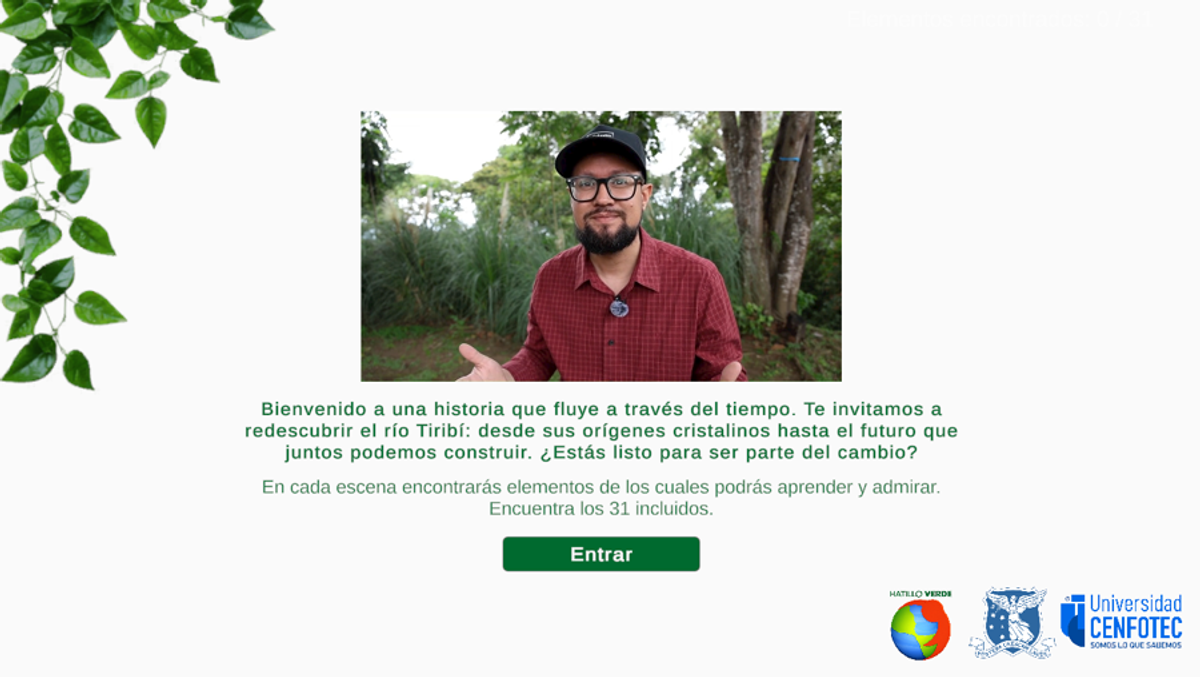
Developing this experience required a delicate technical balance. The team built the experience in Unity and exported it to WebGL so that it would run directly from the browser, without installing anything, which brought its own challenges: getting audio and video to start reliably on iOS, which blocks autoplay; optimizing scene loading and memory use so it wouldn't crash on mobile phones; and guiding those entering from their phones to rotate their screen for the best experience.
The central challenge was making an engine designed for video games feel lightweight and accessible on any device, without sacrificing the visual quality of the 3D scene. As a team of fast learners facing new challenges, we managed to fine-tune the performance until the experience loaded and ran smoothly on both desktop and mobile. The result is a perfect bridge between technical rigor and neighborhood passion.
4. The impact: from an idea to real change
On June 10, we celebrated the official launch of the project. This event consolidated our institutional credibility by featuring a strong presence from Universidad CENFOTEC, proving that we are a laboratory capable of executing high-level projects. We were joined by the Rector's Office, Vice Rectors, directors, and key figures such as Ignacio Trejos.
The impact of this visualization does not stop at the digital level: it is strategically designed to be presented to the municipal commission of San José and trigger political decisions in favor of green coverage.
Furthermore, it is consolidated as a valuable contribution in an associated research paper, capturing the interest of international entities such as the Melbourne Centre for Cities.
5. Join this effort
Hatillo Verde is a clear example of how we translate laboratory work into a language everyone can understand, showing how our solutions improve people's lives. Technology can (and should) be a fundamental ally of nature.
- Learn more about SpatialLab and our portfolio: https://spatiallab.ucenfotec.ac.cr/#about
- Explore the interactive experience: https://neoecosistemashatillo.ucenfotec.ac.cr/
- Strategic collaborations, press, or inquiries? Write to us: spatiallab@ucenfotec.ac.cr
Note: Hatillo Verde is a project developed in community and institutional collaboration, with the digital contribution of SpatialLab and the support of Universidad CENFOTEC.